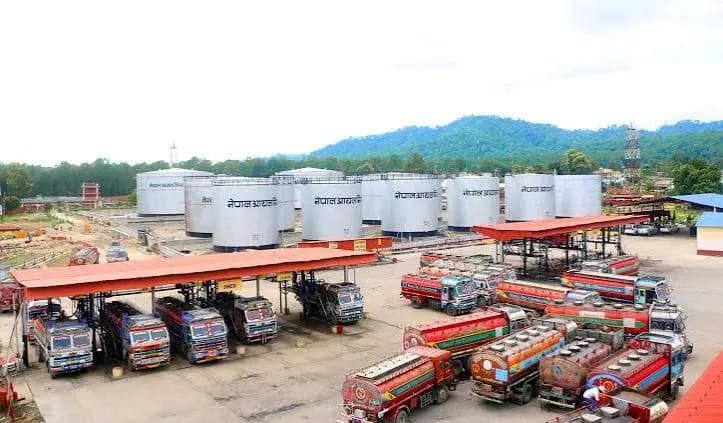
Nepal Oil Corporation (NOC) is responsible for importing, storing and distributing petroleum products and cooking gas across Nepal. In recent weeks, the corporation has faced intense public attention because consumers reported difficulty finding LPG cylinders even as NOC said overall imports were regular and supply was sufficient.
This detailed guide explains the Nepal Oil Corporation fuel price list today, the latest LPG gas distribution arrangement, petrol and diesel rates, how NOC sets prices, why cooking-gas queues occurred, what is happening in the world crude-oil market, and what may happen to fuel prices in Nepal next.
Nepal Fuel Price: Quick Update
Latest price reference: August 22, 2026
Petrol in Kathmandu: Rs 200 per litre
Diesel in Kathmandu: Rs 200 per litre
Kerosene in Kathmandu: Rs 195 per litre
LPG cooking gas: Rs 2,060 per 14.2 kg cylinder
LPG distribution update: Regular distribution has resumed through authorised dealers, while NOC has asked consumers not to stockpile cylinders.
Fuel prices can change after a Nepal Oil Corporation price revision. Always verify the latest notice before buying fuel or making business decisions.
Nepal Oil Corporation Fuel Price List Today
The Nepal Oil Corporation price list is not identical in every district. NOC uses geographical price categories for petrol, diesel and kerosene because transport costs differ across Nepal. However, the household LPG cooking-gas price is generally kept uniform nationwide.
Based on the latest publicly available update, petrol and diesel are priced at Rs 200 per litre in Kathmandu, Pokhara and Dipayal. A standard 14.2 kg LPG gas cylinder costs Rs 2,060.
| Product | Kathmandu / Pokhara / Dipayal | Surkhet / Dang | Other listed distribution centres |
|---|---|---|---|
| Petrol | Rs 200/L | Rs 199/L | Rs 197.50/L |
| Diesel | Rs 200/L | Rs 199/L | Rs 197.50/L |
| Kerosene | Rs 195/L | Around Rs 194/L | Rs 192.50/L |
| LPG cooking gas | Rs 2,060 per standard 14.2 kg household cylinder | ||
Important: The table is a current reference, not a permanent guarantee. The Nepal Oil Corporation price list today may be revised after NOC receives updated import costs from Indian Oil Corporation (IOC). Check the latest NOC notice or a verified daily price service before filling a tank, purchasing fuel in bulk, or publishing a business rate card.
For daily financial-market information, company updates and Nepal Stock Exchange data, visit NEPSE Live Market.
How Nepal Oil Corporation Distributes LPG Gas
Many people ask: “Nepal Oil Corporation le gas kasari distribute garcha?” The answer is that NOC does not normally sell every household cylinder directly to consumers. It manages the upstream supply system, while licensed LPG bottling companies, distributors and authorised dealers deliver cylinders to the market.
Step 1: Import from India
Nepal depends heavily on India for refined petroleum products and LPG. Indian Oil Corporation is NOC’s core supplier under a government-to-government supply arrangement. Petrol, diesel, kerosene, aviation fuel and LPG are imported based on NOC’s procurement planning and market requirement.
Step 2: Transport, storage and supply management
For petroleum products such as petrol and diesel, Nepal uses infrastructure including the Motihari–Amlekhgunj petroleum pipeline and road tankers. From depots and storage facilities, the products are dispatched to petrol pumps and regional markets.
LPG works differently. Cooking gas generally arrives in specialised LPG tankers or “bullets.” It is supplied to bottling plants, where it is filled into household cylinders. The filled cylinders are then delivered through dealer networks and local distributors.
Step 3: Bottling plants and authorised dealers
The LPG bottling company fills the cylinder, records stock and sends cylinders toward authorised dealers. Consumers are expected to buy from their nearest authorised dealer rather than rely only on emergency distribution points.
In August 2026, NOC said regular LPG sale and distribution would resume through authorised dealers appointed by respective gas bottling plants. Under the updated system, gas industries were instructed to report daily vendor-level distribution details to NOC by 9:00 AM. The purpose is to increase transparency, track supply and reduce hoarding or diversion.
Step 4: Consumer purchase and empty-cylinder return
Most households exchange an empty cylinder for a filled one. This return cycle is extremely important. If consumers keep multiple filled cylinders at home, or if empty cylinders do not return to dealers quickly, the market may look short of gas even when imports are continuing.
LPG Distribution Chain in Simple Words
Indian Oil Corporation / supplier → NOC import and supply management → LPG bottling plant → authorised dealer → household cylinder exchange.
If a household is unable to get an LPG cylinder from a nearby dealer, it should first contact the dealer or relevant bottling company. During the recent supply-management period, NOC also publicised hotline and quick-response arrangements for urgent complaints.
For other useful Nepal-focused explainers and updates, explore the Tikajoshi Blog.
Why Were There LPG Gas Queues and Shortages?
In early August, many households in Kathmandu Valley and other locations reported long queues and difficulty obtaining cooking gas. NOC repeatedly stated that national imports were adequate, but consumers experienced a visible retail-level shortage.
Both statements can be true at the same time. A country can have LPG arriving at the border, while some consumers still cannot find a cylinder at a nearby dealer. This usually happens because of a distribution bottleneck, uneven stock allocation, delayed delivery, shortage of empty cylinders, panic buying, or stockpiling.
1. Return to full 14.2 kg LPG cylinders
NOC resumed distribution of full 14.2 kg household cylinders from July 15 after several months in which many households had received half-filled cylinders due to supply disruption concerns. When full-cylinder distribution restarted, many consumers rushed to refill or replace their cylinders at once.
That sudden demand surge placed pressure on bottling plants, delivery vehicles and dealers. A large number of households trying to buy at the same time can create queues even if normal imports have not stopped.
2. Cylinder circulation problem
The LPG business depends on cylinder circulation. A bottling company cannot keep sending filled cylinders into the market if empty cylinders do not return. If households hold extra cylinders, dealers cannot collect empties, or distributors keep stock beyond normal requirements, the refill cycle slows.
3. Panic buying and hoarding
When consumers hear rumours of a shortage, many try to buy an additional cylinder. This behaviour is understandable, but it can worsen the shortage for households that genuinely have no gas left. NOC has asked consumers to avoid unnecessary stockpiling and has said distribution has been improving.
4. Import supply versus last-mile delivery
Import figures alone do not guarantee smooth household access. Last-mile delivery means getting the correct number of filled cylinders from a bottling plant to the correct dealer, at the correct time, with transparent stock records. If this final stage fails, customers still stand in line even if national imports look normal.
5. Emergency distribution points
During the pressure period, NOC arranged special cylinder sales from designated locations in Kathmandu Valley, including Teku and other sites. Such emergency sales can help households in immediate need, but a lasting solution requires regular dealer-level distribution and better cylinder tracking.
Consumer tip: Buy LPG only from authorised dealers, keep your empty cylinder ready for exchange, retain the receipt if provided, and avoid paying unofficial extra charges. Do not stockpile multiple cylinders unless there is a real household need.
How Nepal Oil Corporation Decides Fuel Prices
Nepal does not produce enough crude oil or refined petroleum products for its domestic use. Therefore, NOC’s retail price depends heavily on import costs from Indian Oil Corporation, global energy prices, exchange rates, transportation, taxes, dealer commission, storage and operational costs.
NOC generally receives updated procurement rates from IOC on a regular cycle. Petrol, diesel and kerosene rates are commonly reviewed around every 15 days, while LPG and aviation-fuel costs may follow a different review schedule. NOC’s board then decides whether and how much of the new cost should be passed to consumers.
Main factors behind Nepal fuel price revision
- IOC purchase price: NOC buys finished fuel products from Indian Oil Corporation, so IOC’s price list directly matters.
- International crude oil: Rising global crude usually increases the cost of refined petrol, diesel and LPG over time.
- Indian refining and transport cost: Nepal imports refined products, not simply crude oil, so refinery margins and product availability also matter.
- Nepalese rupee and Indian rupee relationship: Currency movement can influence import cost.
- Government taxes and levies: Tax structure affects the final retail price paid by consumers.
- Transport and regional cost: This is why fuel rates differ by NOC price category.
- NOC financial position: The corporation may absorb some losses or delays in full price pass-through, depending on policy and its financial condition.
For example, NOC raised petrol by Rs 3 per litre and diesel/kerosene by Rs 5 per litre in early August after receiving higher procurement rates from IOC. LPG was kept unchanged at Rs 2,060 per cylinder at that time.
World Crude Oil Market Update: Why It Matters to Nepal
World crude oil prices are currently elevated compared with early July. Brent crude, the major international benchmark, was around US$94 per barrel on August 21, 2026. That was notably higher than the August average earlier in the month and above July’s average level.
The biggest reason is concern about Middle East supply disruption. Tensions involving Iran, the United States and regional energy routes have affected shipments through the Strait of Hormuz. The strait is one of the world’s most important oil-shipping chokepoints, so any reduction in shipping immediately raises concern about global supply.
What is happening in the global oil market?
- Brent crude has moved into the low-to-mid US$90s per barrel.
- Middle East supply and refinery disruptions have kept the market nervous.
- Shipping through the Strait of Hormuz has been significantly lower than normal.
- Diesel and petrol prices can remain high even when crude itself moves down briefly, because refined-product supply and refinery capacity also matter.
- Markets may fall quickly if conflict eases or if transport routes normalise, but prices can rise further if disruption continues or expands.
Nepal does not purchase crude oil directly for household use. However, crude prices influence the price of petrol, diesel, kerosene, aviation fuel and LPG that IOC sells to NOC. The impact does not always appear on the same day. It can take time for global changes to flow through refinery pricing, IOC’s supply list and finally an NOC price revision.
For broader current-affairs, sports and trending stories, visit our Chill Zone.
Nepal Fuel Price Prediction: What May Happen Next?
Short answer: The near-term risk for Nepal fuel prices remains tilted upward or volatile, not clearly downward. Global Brent crude is around the mid-US$90s, supply conditions remain uncertain, and Nepal’s purchase costs depend on the next IOC price list.
However, no one can accurately guarantee a specific NOC price increase or decrease before the corporation receives new procurement rates and makes an official decision. A responsible fuel-price prediction should be based on scenarios rather than a fixed rupee estimate.
| Scenario | World Oil Market Condition | Possible Nepal Impact |
|---|---|---|
| Base case | Brent remains around US$90–100 and regional tensions continue. | NOC may keep prices high or make small upward adjustments if IOC costs rise. |
| Upside risk | Supply disruption worsens, shipping faces new restrictions, or Brent rises above US$100. | Petrol, diesel and possibly LPG import costs could rise further; domestic price pressure would increase. |
| Relief case | Conflict de-escalates, shipping normalises and Brent drops sustainably into the US$80s. | IOC purchase prices could decline; NOC may later have room to reduce rates, subject to its financial position and policy. |
At the moment, the most realistic short-term expectation is price volatility. A sharp immediate reduction in Nepal fuel price appears less likely while crude remains elevated and supply disruption is unresolved. Petrol and diesel can be revised sooner than LPG because LPG pricing is not always adjusted in the same cycle.
Businesses that depend heavily on transport—such as logistics firms, bus operators, delivery companies, construction suppliers and online retailers—should budget for continued fuel-price uncertainty rather than assume a quick return to lower rates.
Nepal Oil Corporation Vacancy, Notice and Online Application
Searches for Nepal Oil Corporation vacancy, Nepal Oil Corporation vacancy 2082, Nepal Oil Corporation online application, Nepal Oil Corporation online form, erecruitment Nepal Oil Corporation and Nepal Oil Corporation syllabus are also common.
Vacancy notices, application deadlines, syllabus information and recruitment instructions can change. Candidates should not rely only on social-media screenshots or old blog posts. Use the official NOC website, the official notice board and the recruitment portal mentioned in a current NOC vacancy notice.
Before applying, check these points:
- Vacancy post, level, service group and required qualification
- Application deadline and whether an extended deadline has been published
- Required documents, photograph, citizenship details and educational certificates
- Online form process and payment instructions
- Official syllabus, exam format and written-test date
- Official contact details for technical or payment-related problems
Users searching for Nepal Oil Corporation Teku contact number or Nepal Oil Corporation contact number should verify the number through NOC’s latest official notice, especially during LPG distribution periods when hotline arrangements can be updated.
If you need to reduce the file size of a NOC notice screenshot, LPG price poster or fuel-rate infographic before uploading it, use our free image compressor tool.
Frequently Asked Questions
What is the Nepal Oil Corporation fuel price list today?
Based on the latest verified update, petrol and diesel cost Rs 200 per litre in Kathmandu, while kerosene is Rs 195 per litre and a 14.2 kg LPG cylinder costs Rs 2,060. Rates vary by geographical category outside Kathmandu.
What is the Nepal Oil Corporation petrol price today?
Petrol is Rs 200 per litre in Kathmandu, Pokhara and Dipayal. It is lower in other NOC price categories because of different transportation costs.
What is the Nepal Oil Corporation diesel price today?
Diesel is Rs 200 per litre in Kathmandu, Pokhara and Dipayal under the latest referenced price list.
What is the LPG gas price in Nepal today?
A standard household LPG cylinder containing 14.2 kg of cooking gas is priced at Rs 2,060.
Is there a gas shortage in Nepal?
NOC has said national LPG supply and imports are adequate, but consumers recently faced dealer-level shortages and queues. The issue has been linked to high demand after full-cylinder distribution resumed, cylinder circulation problems, uneven delivery and stockpiling concerns.
How does Nepal Oil Corporation distribute gas?
NOC manages imports and supply. LPG reaches bottling plants, where it is filled into cylinders and delivered through authorised dealers. Consumers usually exchange an empty cylinder for a filled one.
Why is gas not available at some dealers even if NOC says supply is normal?
Imports, bottling, cylinder availability and last-mile delivery are different stages. A delay or imbalance at the dealer level can create local shortages even when national import volumes remain adequate.
Will petrol and diesel prices decrease in Nepal soon?
A decrease is possible only if IOC procurement costs decline and NOC decides to pass the benefit to consumers. With global crude remaining elevated and Middle East supply risk continuing, the immediate outlook is uncertain.
Why do Nepal fuel prices change?
NOC fuel-price revisions depend on IOC purchase rates, international oil prices, refinery and transport cost, taxes, exchange rates, regional transport expenses and NOC’s financial condition.
Where can I find Nepal Oil Corporation vacancy 2082 notice?
Use the official NOC website and verified recruitment notice channels. Check the official notice carefully for application date, eligibility, syllabus and online-form process.
Final Takeaway
Nepal’s LPG challenge is not only an import issue; it is also a distribution, cylinder-return and consumer-confidence issue. NOC’s return to authorised-dealer distribution and daily dealer reporting is intended to improve transparency, but stable access will depend on whether supply reaches households consistently.
For fuel prices, the immediate risk remains global. Brent crude has been elevated because of Middle East supply uncertainty, and Nepal remains exposed because it depends on imported refined petroleum products from India. Watch the next Nepal Oil Corporation price revision and IOC procurement update rather than relying on rumours.
Last updated: August 24, 2026. Fuel prices, distribution instructions, helpline details and vacancy notices may change. Verify the latest Nepal Oil Corporation notice before taking action.